Performance apparel works best when it suits the session you actually plan to do. A shell that feels fine on a dry commute may be restrictive over hiking layers; training shorts that feel secure during lifting may not be the pair you want for a longer run. Start with movement, weather, layering and the details you can verify on the product page.
How to Use This Performance Apparel Fit Guide
Use this guide to narrow a choice before ordering, not to replace a product’s own size chart, material list or care label. First, identify your main use: running, gym training, commuting, hiking, or a mix. Then consider the conditions in which you expect to wear the item and whether it needs to work alone or as part of a system of layers.
Fit is personal, so measurements and movement checks matter more than a familiar size label. Compare the garment’s stated construction, pocket layout, liner details and adjustment features with the way you plan to use it. If you are between sizes, use the brand’s size guidance and make a decision that leaves room for the movements and layers you genuinely need.
Before purchasing, also check the applicable returns and exchanges terms. A fitting trial at home can help distinguish an initially comfortable item from one that remains practical when you reach, stride, bend and add your usual layers.
Start with Activity, Weather and Layering Needs
Choose a starting fit according to the activity rather than treating “performance fit” as one universal category. Runners often need an unrestricted arm swing, a stable waistband and storage that does not distract from their stride. Gym users may prioritise a secure feel through squats, lunges and overhead work. Hikers and commuters usually need more flexibility around layers and changing temperatures.
For warm, high-output sessions, begin with a simple question: where could extra fabric rub, trap heat or get in the way? A close-but-not-constricting fit can make movement easier to assess. Check the neckline, armholes, waistband and inner seams, because these areas are likely to be noticeable during repeated motion.
For cooler or wet conditions, start with the layer plan. A shell needs enough room for the base layer and insulating layer you normally wear, not every item in your wardrobe. If you usually wear only a tee underneath, sizing solely for a thick fleece can leave too much loose fabric. Conversely, a shell that feels comfortable over a tee may become tight at the shoulders when worn over a mid-layer.
Weather protection should be treated as a system: the garment’s design, its adjustment points, the layers beneath it, your exertion level and the conditions all affect the result. Check intended use and construction details rather than assuming that any technical-looking jacket will suit every storm or temperature.
Fit a Shell for Movement and Layering
A well-chosen shell should let you move through the range of motion required by your activity without turning every reach into a tug at the hem or a pull across the shoulders. Try an arm swing, an overhead reach, a forward lean and a twist through the torso. Notice whether the cuffs ride up, the hood shifts across your view, or excess fabric gathers uncomfortably at the chest and lower back.
Next, repeat those checks over the layers you expect to use. The goal is practical room, not a deliberately oversized silhouette. You should be able to breathe and move freely, while still being able to use the cuff, hem and hood adjustments as intended. If adjustment cords, cuffs or the hood become difficult to use once layered, reconsider the size or the layer combination.
Coverage is another useful check. A longer back hem may be helpful when bending over a pack or riding a bike, while a shorter cut can feel less bulky for running. Pocket position also matters: pockets that sit comfortably while standing may be awkward under a hip belt or when your arms are swinging.
For model-specific sizing, manuals, product-care guidance or service questions, consult the brand’s official support resources. Arc’teryx’s help centre, for example, provides links to a sizing and fit guide, product manuals, product care and product service. Those resources are more reliable for a particular garment than broad assumptions based on a similar-looking shell.
Choose Training Shorts for Stride, Support and Storage
Training shorts should allow a full stride and the movements you perform most often. Walk, jog in place, squat and step up if you can. The waistband should remain comfortably in place without forcing you to keep adjusting it. Check whether the hem catches at the thigh, whether side vents open naturally, and whether the fabric feels restrictive when your knee lifts.
A lined short combines an outer short with built-in support. That can simplify a running outfit for people who like the feel and coverage of the liner. A linerless short gives you more freedom to choose underwear or a base layer separately. Neither construction is automatically better: the more useful choice is the one that stays comfortable and supportive through your expected distance, pace and movement.
Treat pocket design as part of fit. A phone pocket, zip pocket or small internal pocket may sound useful, but test where the load sits when you move. A storage option that works for keys may not be comfortable for a phone during a run. For gym sessions, consider whether the pocket contents will interfere with benches, machines or floor exercises.
Use the range filters and product details in Nike’s Training & Gym clothing range to compare shorts alongside relevant pants and tops. Then verify each item’s liner, pocket and material information on its own product page, since these features can vary within a collection.
Assess Moisture Management and Fabric Feel with Care
Fabric technology names can be a useful starting point, but they are not a promise that every wearer will feel dry or comfortable in every setting. Nike publishes official help information about Dri-FIT, but an individual garment’s real-world feel still depends on its construction, the weather, your effort level, the layers around it and your own preferences.
Read the material and construction details alongside any technology description. A lightweight running top, a close-fitting base layer and a roomy training tee can all feel different even when they are marketed for active use. Look for practical details such as mesh panels, lining, thickness, cut and intended activity, then compare them with the temperatures and intensity you expect.
During a try-on, assess next-to-skin comfort as well as the label. Raise your arms, bend, and hold the garment against the areas most likely to become warm or damp. Consider whether the fabric feels comfortable when still, whether it layers easily, and whether you would be happy to wash and rotate it after frequent use.
Avoid treating a branded moisture-management term as proof of superior performance, a health benefit or a guarantee of dryness. It is better used as one documented product detail among several.
Factor Care, Service and Durability into Total Value
Total value includes the work required to keep an item usable. Before ordering, read the care information on the product page and label, then consider whether the washing routine fits your usual rotation. Frequent high-output use, repeated washing, abrasion from packs and the way an item is stored can all influence how a garment feels over time.
Do not turn general care guidance into a durability guarantee. Instead, decide whether you can follow the item’s instructions and whether you have enough clothing to rotate it between uses. A garment that is easy to care for within your routine may deliver more practical value than one whose features you rarely use.
For a specific item, use official product-care and service resources rather than relying on a generic social-media tip. Arc’teryx’s official help centre directs customers to product care, product service, returns and refunds, as well as product manuals. Check the relevant brand’s current information before washing, repairing or returning an item.
Finally, review the retailer’s returns and refund terms before removing tags or wearing the garment outdoors. That gives you a clearer route to resolve an incorrect size or an unsuitable fit.
Use a Practical Try-On and Comparison Checklist
AI-generated generic editorial illustration — not a retailer product photo and does not depict the reviewed product or service. Make the final buyer-led try-on checklist quickly scannable.
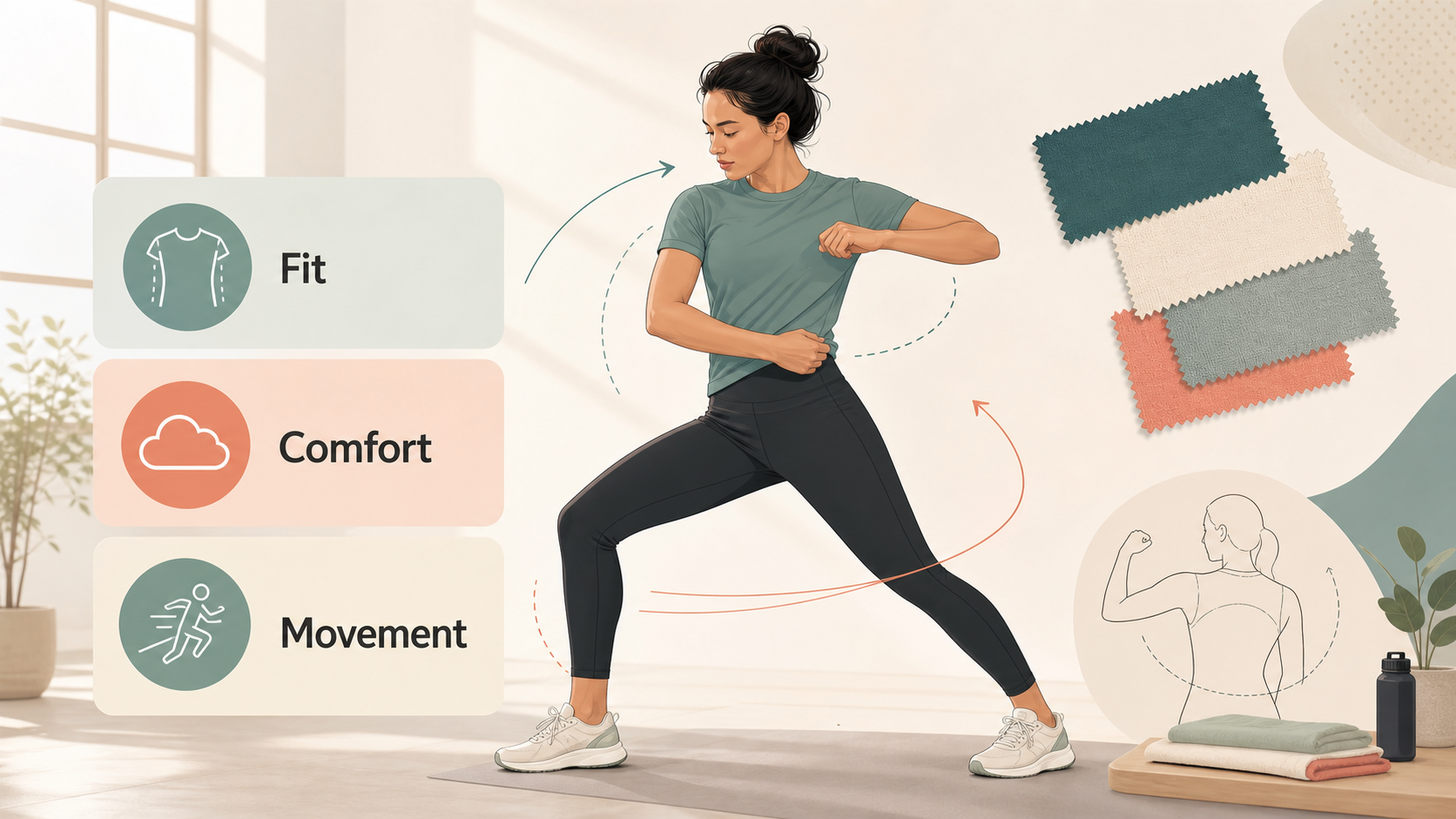 When comparing two options, test each one in the same way. Wear the base layer or underwear you would normally use, then take a few minutes to move rather than judging only by the mirror.
- Shell mobility: reach overhead, swing your arms, twist and bend. Check for shoulder pull, hem lift and uncomfortable bunching.
- Layering room: add the actual mid-layer you plan to wear. Confirm that the jacket still closes comfortably and that cuffs, hem and hood adjustments remain usable.
- Shorts and stride: jog in place, squat and step up. Look for a waistband that stays put and a hem that does not catch.
- Liner preference: decide whether built-in support feels right for your session, or whether you prefer to choose a separate base layer.
- Storage: put your usual essentials into the pockets and move again. Assess bounce, access and interference.
- Care and return route: read the item’s instructions and the seller’s current policy before committing.
Write down the reasons for your preference: better movement, better layer compatibility, more useful storage or simpler care. This reduces the chance that a memorable fabric claim or familiar logo outweighs the features that matter in regular use.
Frequently Asked Questions
How close should a running shell fit when I may add layers?
It should be close enough that excess fabric does not distract from your arm swing, but roomy enough for the base and mid-layers you actually intend to wear. Test the shell over that combination and check overhead reach, torso rotation, hem coverage and whether hood, cuff and hem adjustments still work. For the final size decision, use the product-specific size guide where available.
Are lined training shorts necessarily better for running?
No. A lined short may suit you if you prefer integrated support and a simpler outfit; a linerless pair may suit you if you have a preferred underwear or base-layer system. Compare comfort during stride, waistband stability, seam feel and storage with the garments you normally use. The useful choice is conditional on your movement and preference, not on a universal hierarchy.
Does moisture-wicking fabric guarantee that I will stay dry?
No. Manufacturer-described moisture-management technology is one factor, not a guarantee. Garment construction, ventilation, weather, activity intensity, layering and individual comfort all influence what you experience. Review the material details and use a brief movement-based try-on to decide whether the fabric feels suitable for your intended use.
How should I wash technical running and hiking apparel?
Follow the care label and the brand’s current product-care guidance for the specific item. Avoid assuming that one routine applies to every shell, short or base layer. Arc’teryx’s official support centre includes product-care and product-manual resources, while other brands may provide item-specific instructions on their own sites. Check those sources before washing or attempting a repair.
Sources
Related reading
- Best performance apparel for running, training, and hiking: evidence-led top choices
- lululemon Pace Breaker Short review: practical buying assessment
- Nike Challenger Dri-FIT Short review: practical buying assessment
- How to choose performance apparel for running, training, and hiking for your needs
Editorial information: About our editorial team · Read our editorial policy · Read our affiliate disclosure.