The Pace Breaker sits in the cross-training end of lululemon’s shorts range rather than being framed solely as a running short. That matters if your week includes more than one activity: a short that works for a run may not be the one you most want for lifting, yoga, commuting or a relaxed day out. The supplied independent review describes Pace Breaker as a versatile option for running and cross-training, and its comparison centres on the choice between lined and linerless versions.
This is a buying guide, not an independent wear test. Treat the decision as a match between your routine and your preferred next-to-skin setup. The linerless version may be worth shortlisting when you already know what underwear or compression layer you like to train in. If you prefer an all-in-one short, compare the lined alternative before ordering.
Before purchase, check the live product page for the currently offered lengths, colours, pockets, fabric information, care instructions, size chart, price and return terms. Those details can vary by market and can change after a review is published.
Product Overview and Intended Use
The most useful way to approach the Pace Breaker Linerless Short is as a flexible training short with a separate base-layer decision. In the supplied review, Pace Breaker is presented as lululemon’s versatile, flagship-style option and is discussed in the context of running, weight training, yoga and cross-training. That broad use case can appeal to people who do not want a different short for every session.
“Linerless” does not mean the same thing as “better for every workout”. It means the short is considered separately from what you wear underneath it. Some buyers value that control because they already have underwear or compression shorts that suit their training. Others may find it adds one more choice before they can get dressed and go.
For running, gym work and everyday movement, start with the activity you do most often. Then ask whether your preferred base layer, desired length and carrying needs fit the configuration currently offered. The supplied editorial comparison found that lined and unlined versions can suit different workout settings and personal preferences; it is not a reason to assume identical comfort or support for every wearer.
Strengths for Training and Everyday Movement
A potential strength of the linerless format is flexibility. You can choose the underlayer that feels appropriate for the session rather than relying on an integrated construction. That can make practical sense for a mixed routine: a runner may have one preference, while the same person may choose a different layer for a gym session, yoga or casual travel.
The supplied review is particularly relevant here because it considered both versions in running, yoga and weightlifting contexts. It characterises Pace Breaker as a versatile option for people combining running with cross-training. Read that as a useful starting point for comparison, rather than proof that the short will perform the same way for your stride, training volume, climate or personal comfort preferences.
Linerless construction can also simplify the buying question if you already own base layers you trust. Instead of paying attention only to the outer short, assess the complete setup you will actually wear: outer fabric, chosen underwear or compression layer, intended activity, weather and how much you need to carry. That is more informative than treating the word “linerless” as a universal benefit.
For everyday movement, the same versatility may be attractive if you want one pair to cover a walk to the gym, a workout and less formal off-duty wear. But practical versatility is not the same as a guarantee about appearance, durability or all-day comfort. Confirm the current product specifications and try the fit indoors if the retailer’s policy permits before removing labels or taking the shorts outside.
Storage should be treated as a current-specification check, not an assumption based on the product name or an older review. Decide what you normally carry—phone, keys, card, gels or headphones—and inspect the live product-page pocket description and images. If secure storage is essential on runs, compare the exact version and length you are considering rather than assuming all Pace Breaker options use the same arrangement.
Limitations and Trade-Offs
The main trade-off is straightforward: a linerless short asks you to supply your own next-to-skin layer. That can be a benefit when you have a clear preference, but it can be less convenient if you want a single garment with built-in coverage. The supplied comparison explicitly distinguishes lined and unlined versions as better suited to different settings and workout styles.
Fit is another reason to avoid blanket recommendations. A base layer that works for one person may bunch, ride up or feel too warm for another; the outer short’s fit can also change how the combination feels. No supplied evidence establishes a universal sizing outcome, chafe-free result, moisture-management result or temperature range. Use the current size chart, compare measurements with a short you already own and keep the first try-on low risk.
Weather and activity can change the decision. For a short, easy gym session, you may value simplicity and freedom to choose underwear. For a long run, a hot commute or a hike with a phone and small essentials, factors such as security, coverage, drying time and storage may matter more. Those are selection questions to verify against the live specification, not performance promises made by this guide.
There is also a value trade-off. If you must buy a separate base layer to make the linerless option work for your routine, consider the total cost and laundry burden of the complete system. Conversely, do not assume a lined alternative is automatically better value: the right choice depends on whether its integrated construction replaces something you would otherwise buy and wear.
Finally, product pages, stock, colourways, prices, care labels and return rules are time-sensitive. Verify them at checkout, particularly if you are ordering for a trip, event or a narrow training window. A short can be a plausible candidate for mixed activity without being the most suitable choice for every wardrobe or climate.
Fit, Length and Storage Selection Guide
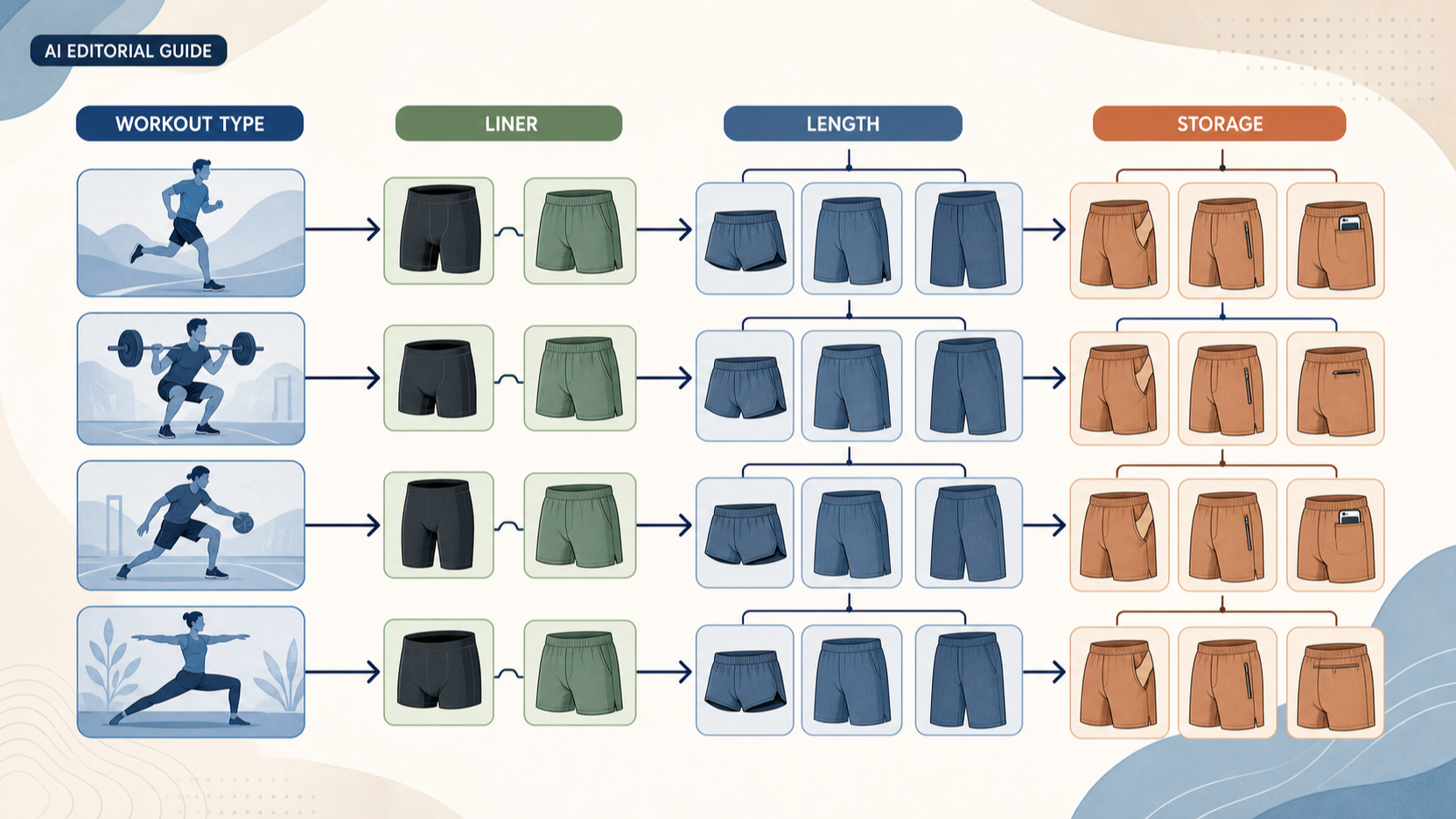
AI-generated generic editorial illustration — not a retailer product photo and does not depict the reviewed product or service. Make the practical selection factors easier to scan without asserting unverified sizing or performance claims.
 Use a short decision process rather than choosing only by colour or a familiar brand name.
First, name the main job. If most sessions are running, prioritise the configuration that works with your preferred running base layer and the amount of secure storage you need. If your routine is mainly gym training or yoga, prioritise ease of movement and whether you prefer to select your own underwear or compression layer. If you want a single pair for commuting and light activity, consider how the whole outfit will work before and after exercise.
Second, choose liner preference before size. A linerless short makes most sense when you are comfortable supplying a separate layer. If you want fewer garments and less setup, compare the lined version as part of the same decision. Neither option is inherently more suitable without reference to your activity and preference.
Third, compare the live length options. Think about where you prefer the hem to sit, how much coverage you want and whether a particular length could affect your stride, gym movements or casual styling. Use your body measurements and a well-fitting existing short as reference points; do not rely on another shopper’s fit description as a prediction for yours.
Fourth, audit storage with your usual kit in mind. List the items that must travel with you, then inspect the current product-page details for the exact variant. For a run, ask whether the setup can carry your essentials securely. For gym or commuting use, ask whether you are happy to use a bag instead.
Finally, complete a home try-on with the base layer and shoes you expect to use. Check comfort while walking, sitting, squatting and lifting a knee. This is a personal fit check, not a substitute for product testing, but it can reveal whether the proposed combination is realistic before you commit to it.
Care, Returns and Total-Value Checks
Care is part of value, especially for training kit that may be washed frequently. Check the current care label and the retailer’s instructions for the precise pair you receive. Follow those instructions rather than applying generic activewear advice, since fabric blends and trim can differ by model or season.
Before ordering, read the return policy that applies in your location. Confirm the return window, condition requirements, hygiene restrictions, whether labels must remain attached and who pays any return cost. If you plan to test fit with your own underwear or compression layer, keep the try-on clean and indoors until you know the pair works.
For total value, compare the complete purchase rather than the ticket price alone. Include the cost of any separate base layers, the likelihood that you will use the short across several activities, and whether its storage and care needs fit your routine. It is reasonable to pay more for a configuration you will genuinely reach for; it is less compelling to pay for versatility you will not use.
Check the current Pace Breaker options, size chart and purchase policies
Who It Suits and How to Decide
Shortlist the Pace Breaker Linerless Short if you want a cross-training-oriented outer short and already prefer choosing your own underwear or compression layer. The supplied editorial review supports considering Pace Breaker for a mix of running, lifting and yoga, while also making clear that lined and unlined versions suit different workout contexts.
It may be less suitable if you specifically want an integrated liner, need a known storage arrangement without checking current specifications, or prefer a product designed around one highly specific use. Runners, gym users, commuters and hikers can all use the same decision path: identify the main activity, decide whether linerless construction matches your base-layer preference, verify the current fit and storage options, then read care and return terms before purchasing.
Frequently Asked Questions
Is the Pace Breaker Linerless Short suitable for both running and gym training?
It can be worth considering for a mixed routine. The supplied independent review discusses Pace Breaker across running, weightlifting and yoga, and presents the style as versatile for running and cross-training. Suitability still depends on your preferred base layer, fit, storage needs and the exact current product configuration.
What is the practical difference between lined and linerless Pace Breaker shorts?
A lined version includes an integrated next-to-skin layer, while a linerless version leaves that choice to you. The supplied review treats the two as options that can work differently across settings and workout styles. Choose linerless when you prefer your own underwear or compression layer; compare lined if you value an all-in-one setup.
How should I choose the right length and size?
Start with the live size chart for your market and compare your measurements with a short that already fits well. Then assess the currently available lengths against your preferred coverage, movement and everyday styling. Try the exact combination with your usual base layer indoors before use, subject to the retailer’s current return conditions.
What should I check about care and returns before ordering?
Check the care label and current local return policy for the exact item. Confirm washing instructions, the return window, condition and label requirements, hygiene-related restrictions and any return costs. These details are purchase checks, so rely on the current official information rather than an older editorial review.
Sources
Related reading
- Best performance apparel for running, training, and hiking: evidence-led top choices
- Nike Challenger Dri-FIT Short review: practical buying assessment
- How to choose performance apparel for running, training, and hiking for your needs
- How performance apparel for running, training, and hiking should fit, feel, and perform
Editorial information: About our editorial team · Read our editorial policy · Read our affiliate disclosure.