Performance apparel works best when it matches the job at hand. This guide compares a versatile training short with a durable waterproof shell using published independent editorial testing and manufacturer care guidance. It is a buying framework, not laboratory testing or a universal ranking.
Verdict: Choose by Activity, Weather, and Layering Preference
AI-generated generic editorial illustration — not a retailer product photo and does not depict the reviewed product or service. Make the answer-first activity, weather, and layering decision rule scannable.
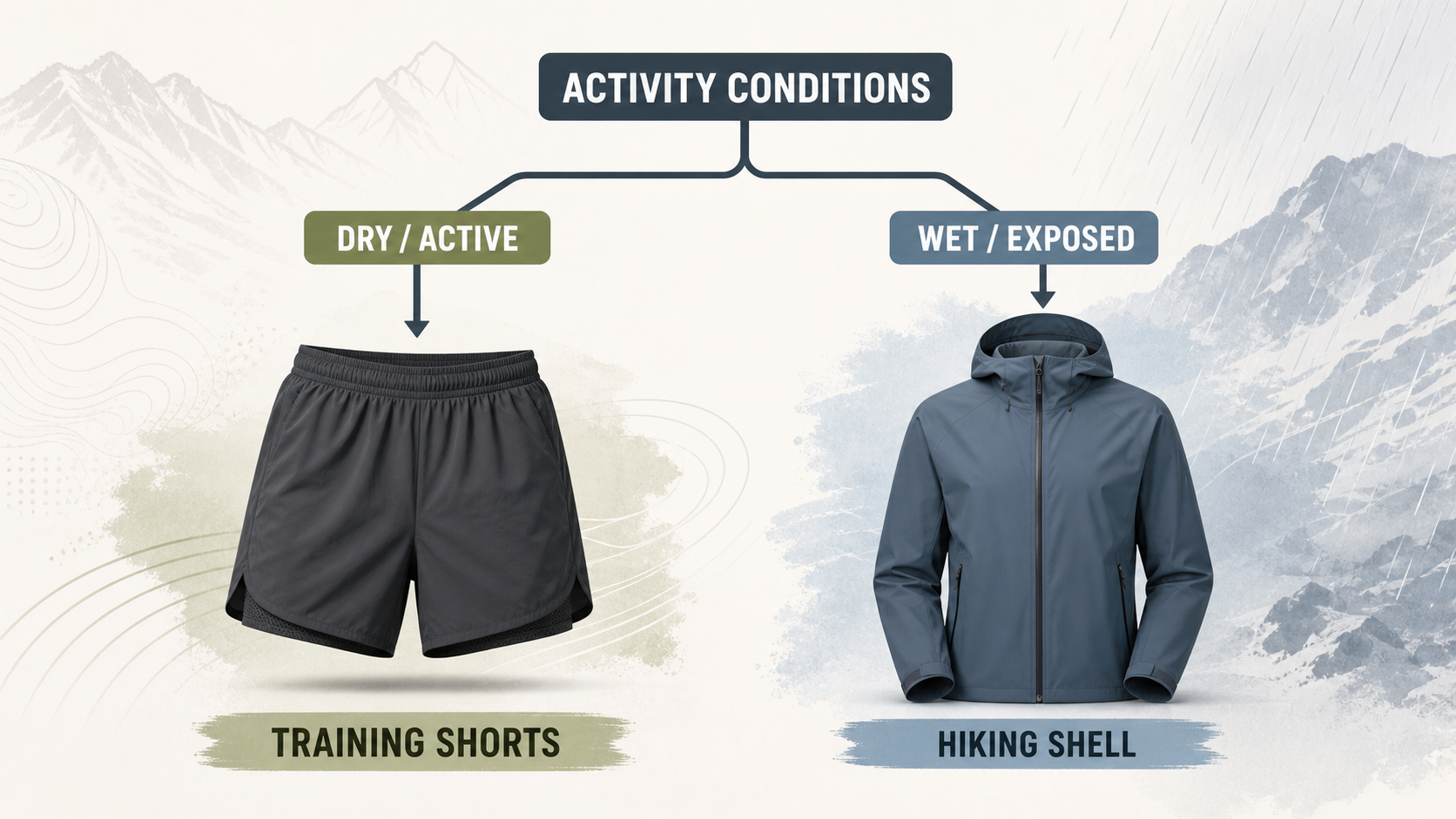 Start with your primary activity. If you need one pair of shorts that can move from a run to strength work or yoga, the Lululemon Pace Breaker is the evidence-backed option in this shortlist. Runner’s World tested lined and linerless versions across running, yoga and weightlifting, and recommended the Pace Breaker for shoppers wanting versatility across running and cross-training.
If sustained rain and wind are the real problem, choose a dedicated waterproof shell instead. Outdoors Magic’s long-term review found the Patagonia Torrentshell 3L performed well on multi-day mountain hikes in wet, windy conditions, while also noting that breathability, weight and packability are compromises rather than category-leading strengths.
The practical rule is simple: choose shorts by movement and liner preference; choose a shell by likely weather exposure, ventilation needs and the layers you expect to wear underneath. For broader category advice, see our performance-apparel buying guide.
What This Performance Apparel Shortlist Covers
This shortlist covers two distinct decisions rather than treating all activewear as interchangeable: flexible shorts for running and gym sessions, and a weather shell for hiking and other exposed outdoor use. The Pace Breaker represents the former; the Torrentshell 3L represents the latter.
The assessment relies on supplied independent editorial reviews. Runner’s World reports using both Pace Breaker configurations during running, yoga and weightlifting. Outdoors Magic reports long-term use of the Torrentshell 3L, including multi-day mountain hikes in Wales. Those sources are useful for identifying published use-case strengths and trade-offs, but they do not make every size, colourway or future production run identical.
Care is also part of the purchase decision. Technical waterproof apparel should be maintained according to the garment label and the relevant manufacturer product-care guidance. Refer to our editorial standards and how-we-research page for how we distinguish reported testing from our buying analysis.
Best for Running and Training Versatility: Lululemon Pace Breaker
The Lululemon Pace Breaker is the clearest fit here for someone who wants a single short for mixed training. Runner’s World characterises it as Lululemon’s versatile flagship short and recommends it for both running and cross-training after testing it in running, yoga and weightlifting sessions. That makes it a sensible starting point for runners who also lift, attend classes or want fewer separate workout garments.
The more important decision is configuration. The review’s central finding is that lined and linerless versions work differently depending on the setting and workout style. A lined short may suit shoppers who prefer an integrated layer for runs or straightforward gym sessions. A linerless version may make more sense when you already have a preferred base layer, want a different underwear setup, or want the flexibility to change what sits underneath.
Neither choice is automatically better. Check how the waistband, leg opening and inseam feel during your own range of motion, and consider the return policy before removing tags or wearing the garment outside. Use our running-shorts fit and liner guide to narrow the choice further.
Best for Wet-Weather Hiking: Patagonia Torrentshell 3L
For hiking where rain and wind are expected rather than merely possible, the Patagonia Torrentshell 3L is the documented choice in this guide. Outdoors Magic’s long-term reviewer reports repeated use on multi-day mountain hikes and describes the jacket as a good performer in wet and windy conditions. The review awards its weather protection five out of five and highlights its protective hood, ventilation and durability.
That evidence supports choosing it when dependable protection and hard-wearing construction matter more than chasing the lightest possible shell. It is especially relevant for hikers planning exposed routes, variable forecasts or longer days where a shell may be worn for extended periods.
The trade-off is clear in the same review: breathability was rated three out of five, as were weight and packability. Ventilation can help manage heat, but it does not turn a three-layer waterproof shell into a minimal warm-weather wind layer. Think about your usual pace, layering system and whether the jacket will spend more time worn or packed. Our waterproof-jacket layering guide can help you plan that system.
Alternatives for More Specialised Needs
Choose a more specialised route when your main activity falls outside the strengths documented above. A runner focused on speed sessions, racing or hot weather may prefer a dedicated running short with the pocket layout, inseam and minimal feel that suits that specific use. The Pace Breaker evidence supports mixed running and cross-training; it does not establish it as the right answer for every running format.
Likewise, a gym user who rarely runs should prioritise the liner arrangement, mobility and coverage they genuinely prefer, rather than buying an integrated liner solely because it is available. Trying a similar cut in controlled conditions and retaining a return option can reduce fit risk.
For trail running, fast-and-light walking or mild-weather commuting, consider whether you need a full waterproof shell at all times. The Torrentshell 3L review supports its wet- and windy-hiking role, while its reported weight, packability and breathability trade-offs point some shoppers towards a lighter category for lower-exposure use. These are category paths, not additional products assessed by this shortlist. See our trail-running apparel guide and gym-clothing buying guide for more focused choices.
Shortlist Comparison: Match the Garment to the Job
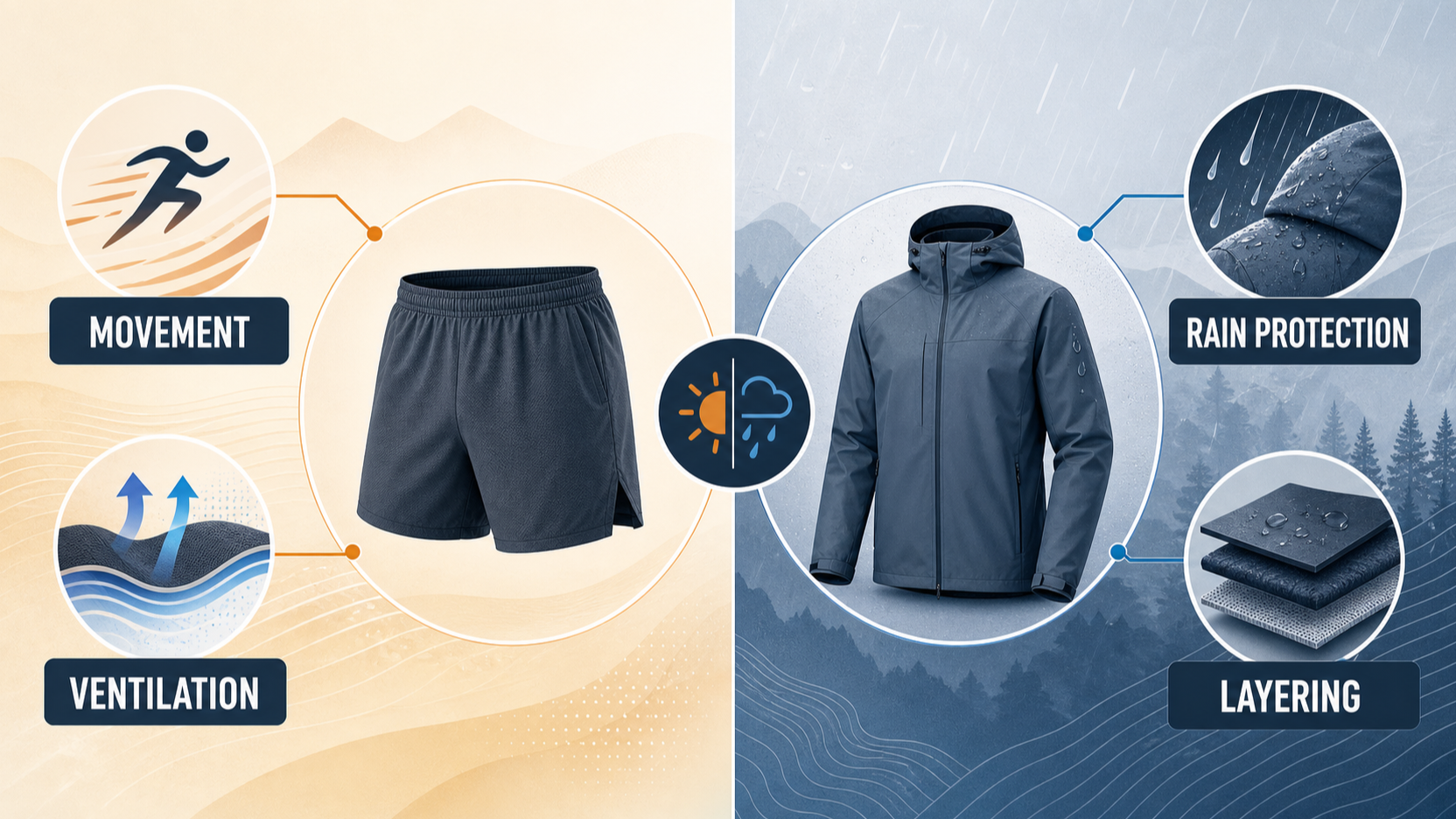
AI-generated generic editorial illustration — not a retailer product photo and does not depict the reviewed product or service. Support the central shortlist table with a visual comparison of the documented use-case split.
| Primary need | Documented choice | Why it fits | Key limit to weigh |
|---|---|---|---|
| Running plus gym or cross-training | Lululemon Pace Breaker | Independent testing covered running, yoga and weightlifting; the review recommends it for versatile running and cross-training use. | Decide between lined and linerless versions based on workout style and layering preference. |
| Hiking in sustained rain and wind | Patagonia Torrentshell 3L | A long-term outdoor review found strong weather protection, useful ventilation and impressive durability in mountain-hiking use. | The same review rates breathability, weight and packability as more moderate. |
| Garment longevity planning | Follow the garment label and official care guidance | Care affects how technical apparel performs and lasts over time. | Guidance is garment-specific, so do not assume one wash routine suits every fabric or finish. |
There is no meaningful head-to-head winner because these garments solve different problems. Choose the Pace Breaker when repeated movement across running and training is the priority. Choose the Torrentshell 3L when weather protection for hiking is the priority. If you need both functions, treat them as complementary parts of a kit rather than substitutes.
Before buying, check the exact version, size availability, price, return terms and care label on the retailer or brand page. Product specifications and policies can change after an editorial review is published.
How to Choose for Fit, Conditions, and Long-Term Care
Use this pre-purchase checklist:
- Define the activity that will account for most wear: running, gym training, commuting or hiking.
- Match the garment to likely conditions. Rain and wind exposure justify more protection; warm, low-exposure use may reward a lighter option.
- For shorts, decide whether an integrated liner fits your normal workout and underwear preference.
- For shells, consider ventilation alongside waterproof protection, especially if you hike hard or layer heavily.
- Check fit through the movements you actually make: squats, strides, reaching and wearing a pack can reveal different pressure points.
- Confirm the return policy and keep the item in returnable condition until fit is clear.
- Read the sewn-in care label and applicable manufacturer product-care guidance before washing technical apparel.
Care should be considered before purchase, not after. A garment that requires handling you will not realistically follow may offer less long-term value than one that fits your routine. For a broader routine, see our garment-care and washing guide.
Frequently Asked Questions
Should I choose lined or linerless shorts for running and gym training?
Choose based on your activity mix and what you prefer next to skin. Runner’s World found that the lined and linerless Pace Breaker versions perform differently across workout settings and styles. A lined option can simplify an outfit; linerless can suit people who want to choose their own base layer. Fit and comfort during your usual movements should decide the final choice.
Is a three-layer waterproof shell suitable for everyday commuting as well as hiking?
It can be suitable when your commute involves real rain and wind, but the evidence in this shortlist is strongest for wet-weather hiking. Outdoors Magic reports good protection, ventilation and durability from the Torrentshell 3L, while also noting middling breathability, weight and packability. For short or mild commutes, decide whether that protection outweighs the bulk for you.
How should I wash and maintain technical waterproof apparel?
Start with the garment’s sewn-in instructions and the manufacturer’s product-care guidance for that material. Avoid applying a generic care routine across different technical fabrics or finishes. Regularly checking the label before washing is the most dependable way to protect fit and performance expectations.
Sources
Related reading
- Patagonia Torrentshell 3L vs Arc'teryx Beta Jacket: which is the better fit
- Patagonia Torrentshell 3L review: strengths, limits, and alternatives
- How to choose performance apparel for running, training, and hiking for your needs
- How performance apparel for running, training, and hiking should fit, feel, and perform
Editorial information: About our editorial team · Read our editorial policy · Read our affiliate disclosure.