A large percentage-off label can be useful, but it is not a verdict. A genuine performance-apparel deal is one where the reduced item is still the right model for the activity, fits the wearer, comes from a seller you can verify, and has terms you can live with if the purchase does not work out. This guide helps runners, gym users, commuters and hikers check those points before paying.
What Counts as a Genuine Performance-Apparel Deal
A genuine deal begins with a comparison that is like-for-like. Compare the same model, colourway, size range and condition—not just two tops, trousers or jackets with similar names. A clearance item may be worthwhile because it meets your needs at a lower total cost; it is not automatically worthwhile because the label shows the largest markdown.
Start with the job the garment must do. A runner may prioritise movement and comfortable layering, while a commuter may care more about weather coverage and care demands. For hiking, the useful purchase is the piece whose documented construction and fit suit the expected conditions. The discount comes last: it improves a sound choice, rather than turning an unsuitable one into value.
Before comparing listings, set a simple standard: exact product identified, specifications reviewed, fit risk understood, seller checked and return route known. If one of those answers is missing, treat the saving as unverified rather than urgent.
Identify the Exact Model Before Comparing Prices
Record the product name and the details that distinguish it from near matches: product code if shown, intended activity, material composition, construction, colour, size and condition. Retail catalogues often group clothing under broad categories such as running, training and gym, jackets and vests, pants, shorts, and sweats and sweatshirts. Those categories are helpful starting points, but they are not proof that two listings are the same item.
Open the full product pages side by side. Check whether both describe the same version rather than a previous season, outlet-specific version, bundle or visibly used item. Note included features, care instructions and any exclusions before comparing prices. If a listing omits details that matter to you, do not fill the gaps with assumptions from a similar product.
Use the original price only as context. A lower price is meaningful when it applies to the same verified item in a size you can use and on terms you accept. If the exact model cannot be confirmed, compare it on its own documented merits instead of treating the reference price as a saving calculation.
Match Materials and Construction to the Job
A deal has to be wearable to have value. Read the composition, construction notes and care label information with the intended activity in mind. For a training layer, ask whether the cut allows the movements you expect. For running, consider whether it will layer comfortably and whether the stated fabric characteristics suit the conditions in which you normally run. For commuting or hiking, focus on the coverage, layering role and maintenance you are prepared to manage.
Avoid translating a marketing phrase into a promise that the product page does not make. Instead, use the listed information to answer practical questions: Is this an insulating layer or a light outer layer? Is the fabric blend and care routine realistic for how often you will wear it? Does the garment’s design leave room for the base or mid-layers you already own?
Compare the discounted piece against your actual kit, not an abstract ideal. A less expensive item that duplicates an existing garment may offer little extra value, while a sensibly reduced piece that fills a clear gap can earn its place. The aim is not to find the most technical description; it is to select a documented specification that matches the job.
Check Fit, Condition and Return Eligibility
Fit is part of the price. Review the seller’s size information, measurements where provided, cut description and customer-facing condition notes. Consider how the garment must move, what you will wear underneath it and whether a close or relaxed fit would change its usefulness. If you are between sizes or are trying a new cut, build that uncertainty into the deal decision.
Condition needs the same discipline. Confirm whether the item is new, returned, repaired, pre-owned, missing tags or sold with any stated cosmetic variation. Photographs can help, but they should be read together with the written condition description. Keep a copy of the listing, order confirmation and the stated condition when you buy; these records are useful if you need to discuss a return or a discrepancy.
Return eligibility is not a generic feature of online shopping. Check the policy that applies to the exact seller, item condition, sale status and delivery location before placing the order. Look for the return window, required condition, proof-of-purchase requirements, return costs and whether an exchange is actually available. A cheap item that cannot be returned may still be right for a familiar model, but it carries more fit risk when the model is new to you.
Verify the Seller and the Policy Behind the Price
Treat seller identity, authenticity signals, product description and return terms as separate checks. A polished product page cannot by itself establish who is responsible for the order, and a familiar brand name in a listing is not a substitute for checking the retailer’s identity, contact route and applicable policy.
Read the policy before checkout rather than assuming all brands handle changes in the same way. Arc’teryx states in its official FAQ that it does not offer exchanges for purchases made on arcteryx.com; its stated route is to return and repurchase, subject to the standard return policy. That difference can affect the practical cost and effort of choosing an uncertain size.[^arcteryx-faq]
The same FAQ says that confirmed online orders cannot be cancelled or altered, and that orders may be cancelled for reasons including billing-information discrepancies or policy breaches. It also notes restrictions relating to bulk purchasing and freight forwarding.[^arcteryx-faq] These examples do not define every retailer’s terms. They show why you should read the policy for the channel you are using, including the retailer’s published returns information, before treating a listed reduction as a dependable saving.[^nike-returns]
Calculate Total Value Instead of Chasing the Biggest Markdown
Calculate the amount you will actually pay: item price, delivery, taxes or duties where shown, and any foreseeable return cost. Then weigh that total against expected use. A lower ticket price can be poor value if the garment does not fit, duplicates something you own or needs more care than you will realistically provide.
A simple cost-per-wear estimate can keep the decision grounded: divide the expected all-in cost by the number of wears you reasonably expect. It is an estimate, not a guarantee, but it makes comparison easier between a deeper discount on a speculative purchase and a smaller reduction on an item you know you will use.
Also count friction. A seller with restrictive change or return terms may make a size experiment less attractive than a comparable item with a clear route to resolve a problem. Do not assume that an item will be durable, easy to return or suitable for every condition simply because it is sold as performance apparel. Base the decision on the documentation available and on your own planned use.
Use a Pre-Checkout Deal Checklist
AI-generated generic editorial illustration — not a retailer product photo and does not depict the reviewed product or service. Make the final purchase checks scannable before a reader commits to a discounted item.
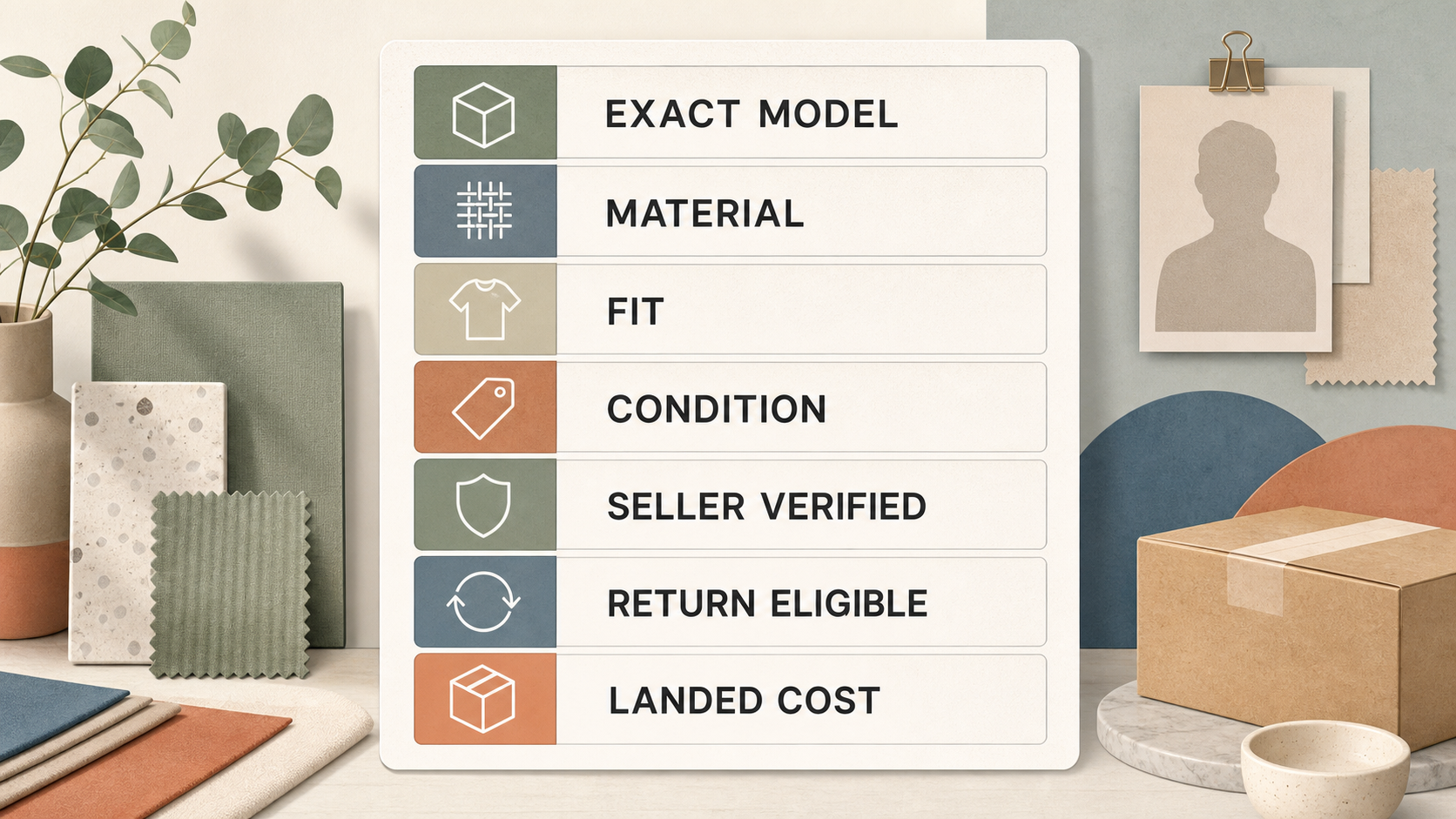
Run this sequence immediately before paying:
- Model: Is this the exact product, version, colour, size and condition I compared?
- Specifications: Do the documented materials, construction and care needs suit the intended activity?
- Fit: Have I checked the size information and accounted for layering or movement?
- Seller: Can I identify who is selling the item and where to obtain support?
- Policy: Does the published policy cover this item, and are returns, exchanges, cancellations or other restrictions acceptable?
- Total cost: Have I included delivery and the likely cost of a mistake?
Save the product page, policy page, order confirmation and any delivery or return instructions. Policies can differ by brand and purchase channel; for example, Arc’teryx’s official FAQ says online purchases are not exchanged and must instead follow the stated return-and-repurchase route.[^arcteryx-faq]
Frequently Asked Questions
Is a 50% discount automatically a good performance-apparel deal?
No. A 50% reduction only describes the displayed price relationship. First confirm the exact model, its condition, fit and the total cost you will pay. If the garment does not suit the activity or you cannot accept the return risk, the larger markdown does not make it a stronger purchase.
How can I tell whether an outlet or clearance item is comparable to the full-price model?
Compare the full product descriptions, product codes where available, materials, construction, colour, size and condition. Do not rely on a category name or an image alone. If the two listings cannot be tied to the same verified model, evaluate the outlet or clearance item on its own documented features and price.
Should I buy discounted apparel if the retailer does not offer exchanges?
It depends on how certain you are about fit and whether the stated return route is acceptable. Arc’teryx’s official FAQ, for example, says online purchases are not exchanged; customers may return and repurchase under the standard return policy.[^arcteryx-faq] Read the policy for your seller and item before deciding whether the saving compensates for the added friction.
What return-policy details should I check before buying sale apparel online?
Check the policy applying to the exact retailer and item: eligibility, time limit, required condition, proof of purchase, costs, exclusions, exchange availability and cancellation rules. Keep the relevant pages and your order records. Published brand help information, such as Nike’s returns-policy page, is a useful place to begin, but the applicable terms must be checked for your purchase channel.[^nike-returns]
[^nike-returns]: Nike Help: What Is Nike's Return Policy? [^arcteryx-faq]: Arc’teryx FAQ
Related reading
- Best performance apparel for running, training, and hiking: evidence-led top choices
- How to choose performance apparel for running, training, and hiking for your needs
- How performance apparel for running, training, and hiking should fit, feel, and perform
- When to buy performance apparel for running, training, and hiking for better value
Editorial information: About our editorial team · Read our editorial policy · Read our affiliate disclosure.