Better value in performance apparel is usually created before checkout. Buy when a piece fills a verified use gap, fits the rest of your kit and has a realistic chance of being worn repeatedly. A headline discount can be useful, but it is only one part of the delivered cost and does not compensate for an awkward fit, unsuitable care routine or a garment that duplicates something you already own.
What Better Value Means for Performance Apparel
Value is not simply the lowest ticket price. For runners, gym users, commuters and hikers, a better purchase is one that supports a known activity, weather pattern or replacement need often enough to justify its cost. A light layer that works for a cool commute and an easy run may earn more useful wear than a more specialised item that only suits a narrow set of conditions.
Start with the job the garment must do. That might be replacing worn tights, adding a layer for a regular early-morning run or making an existing hiking system more workable in changeable weather. Then consider whether it will work with what you already have: base layers, bags, shoes, wash routines and the conditions in which you actually train or travel.
Materials and weather protection matter because they affect how a piece fits into that system, not because a fabric name alone establishes value. Use a materials-and-weather-protection guide to understand the trade-offs, then judge the purchase against your own repeat use. The most useful comparison is between realistic wear opportunities and the total commitment required to own and maintain the item.
Buy for a Specific Use Gap, Not a Generic Upgrade
A generic wish to “upgrade” can make almost any new release look persuasive. A specific use gap is more useful. Write down the situation that currently creates friction: perhaps you lack a layer for a predictable temperature range, your usual training top is no longer comfortable for longer sessions, or your hiking shell no longer fits over the insulation you use.
Next, test whether the proposed item solves that situation better than a change to your existing kit. Could different layering, a repair, a replacement of one worn component or a simple wash-and-care adjustment address the problem? If the answer is no, the purchase has a clearer purpose. If the answer is yes, waiting gives you time to learn whether the gap is real.
Match the category to the activity. A running-layer guide can help you think through movement and layering during regular runs, while a hiking-shell guide can help frame weather exposure and packability for walking. Neither guide can decide comfort for you, but both can keep the comparison tied to the use case instead of marketing language.
Buying ahead of a known training block, trip or seasonal shift can be sensible when it leaves time to check fit and compatibility. Buying far ahead merely because something is available may create storage, care and return-timing pressure without solving an immediate need.
Look for Versatility, Care Compatibility and Repeat Wear
Versatility means useful flexibility, not trying to make one garment do every job. Look for a piece that fits several realistic contexts without creating compromises you will avoid. A mid-layer might suit a commute and lower-intensity outdoor activity; a training top might work for regular sessions and recovery walks. The important question is whether those scenarios occur in your normal month.
Care compatibility is equally practical. Before ordering, check whether the item’s care needs suit your household routine and whether you are willing to follow them. A garment that requires a separate wash, drying approach or frequent attention may still be worthwhile, but its ownership cost is higher than the price tag suggests. Review technical-activewear care guidance before assuming an unfamiliar fabric will fit your routine.
Repeat wear also depends on combinations. Think through what will sit underneath and over the item, how it works with your usual bottoms or pack, and whether you will reach for it across more than one planned session. This is not a promise of durability or performance. It is a way to favour purchases with several credible chances to be useful.
When two options appear similar, prefer the one that meets the defined need with fewer extra purchases, less special care and more plausible repeat wear. That comparison is more durable than trying to predict which product will become cheaper later.
Avoid False Savings from Poor Fit and Over-Specialisation
A low price can still be poor value if the item is uncomfortable, restrictive or difficult to layer. Fit changes how often you will wear a garment, so do not treat size labels or a familiar brand as proof that a new cut will work. Check the product information, compare it with an item you already use and leave enough time to assess it before a deadline.
Over-specialisation is another common source of false savings. A heavily focused piece may be appropriate for a frequent, clearly defined activity, but it can be a weak purchase if it solves a situation that rarely occurs. Ask how often you expect to use its particular features and whether a more adaptable layer would cover most of those occasions.
Do not force a bargain to work by buying companion items you did not plan to need. The delivered commitment may include compatible layers, shipping, return effort and care products as well as the original item. A reduced price is relevant only after these factors have been considered.
Fit and care are connected. A garment that feels acceptable on its own may not work over a base layer or beneath a shell, and a care routine that seems manageable once may be less realistic after repeated use. Use a fit-and-sizing guide and a technical-fabric-care-mistakes guide to create a short test list before the return period begins.
Use Return Windows to Test Fit and Layering Without Guesswork
AI-generated generic editorial illustration — not a retailer product photo and does not depict the reviewed product or service. Make the return-window risk-reduction process immediately scannable.
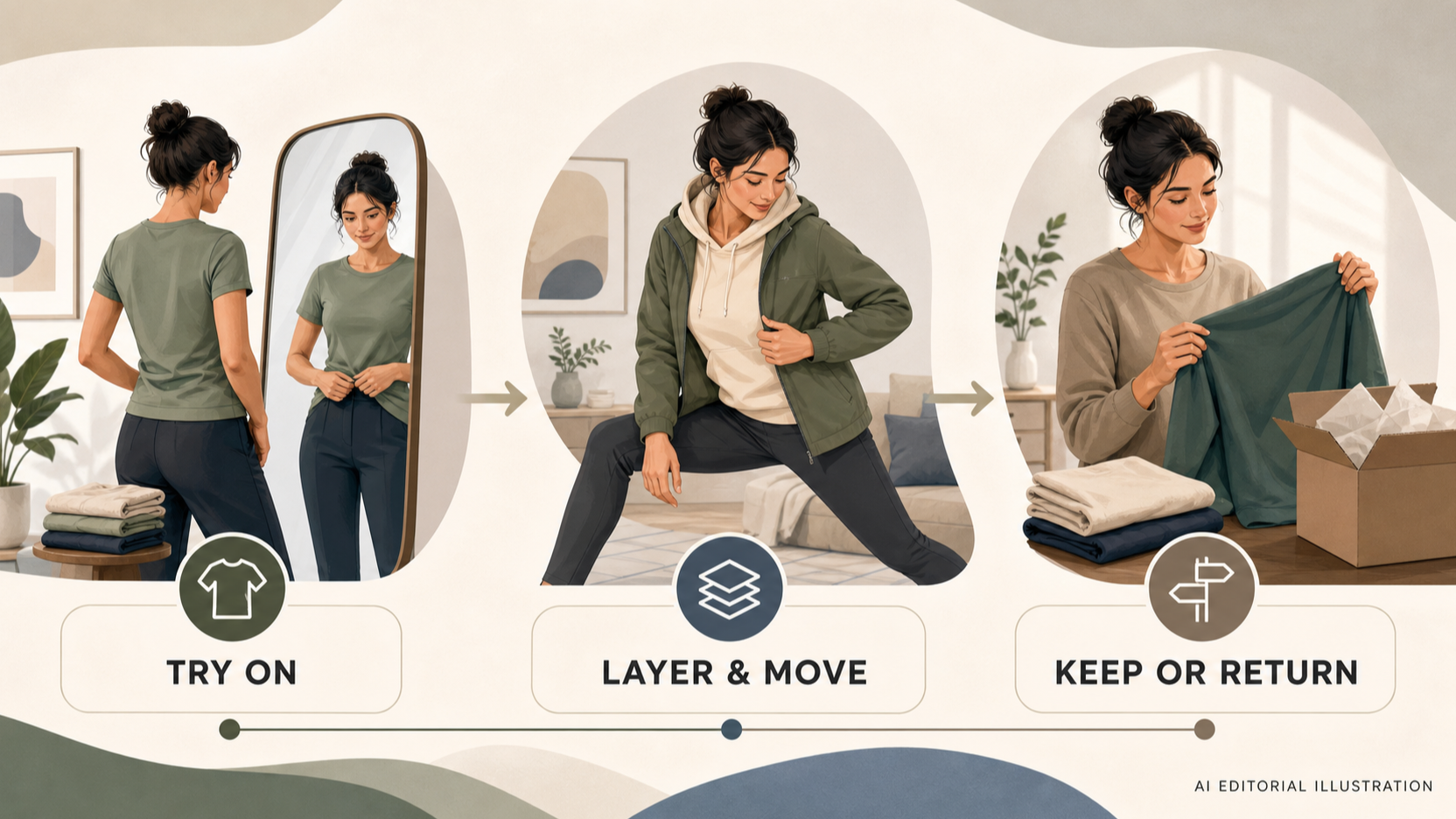 Return terms can reduce purchase risk, but they are not a substitute for checking the conditions before you order. Arc’teryx’s United States shipping-and-returns page says eligible items may be returned within 30 days and promotes free returns. That is useful as an example of why a documented return option can matter, but eligibility, region and the terms that apply to a particular order must be checked directly before purchase.
Plan a short, careful assessment as soon as the item arrives. Try it with the layers you already own, move through the activity-relevant range of motion and check whether it is comfortable in the setting where you expect to use it. Keep tags, packaging and the item’s condition in line with the retailer’s stated requirements while you decide.
Do this before a trip, race, commute-weather change or training block, rather than opening the parcel at the last moment. The point is not to treat returns as a guarantee; it is to give yourself a realistic opportunity to identify a mismatch and follow the current policy if the item is eligible.
Nike’s official return-policy help page is another reason to check the live regional terms and any applicable exceptions rather than relying on a general assumption about “free returns”. Policies and item conditions can differ, so use the retailer’s current checkout and help information for the order you are about to place.
Time Purchases Around Your Use Calendar and Total Cost
The practical time to buy is when a known need is close enough to evaluate, but not so close that fit checks or an exchange become stressful. Mark predictable moments: a training programme beginning soon, a regular commute becoming colder or wetter, a hiking trip, or a replacement need after an existing item is no longer usable for its intended role.
Build in time for delivery, trying the item with your current layers and following any eligible return or exchange process. If an event is imminent, a purchase made solely because it is discounted may be riskier than using a proven item you already own. The decision should reflect the consequence of a poor fit, not only the advertised reduction.
Compare the delivered total. Include the item price, shipping, likely return friction and any care requirements that add time or cost. A smaller discount on a well-matched piece can be better value than a larger reduction on an item that needs extra purchases or is unlikely to be worn.
Check the retailer’s current terms at checkout. Arc’teryx’s US page illustrates that return eligibility and time limits are published terms, while Nike’s official help material reinforces the need to review the policy applicable to the order. Promotions, stock and regional rules can change, so this guide does not predict them.
A Practical Pre-Purchase Value Checklist
AI-generated generic editorial illustration — not a retailer product photo and does not depict the reviewed product or service. Support the final actionable purchase decision framework.
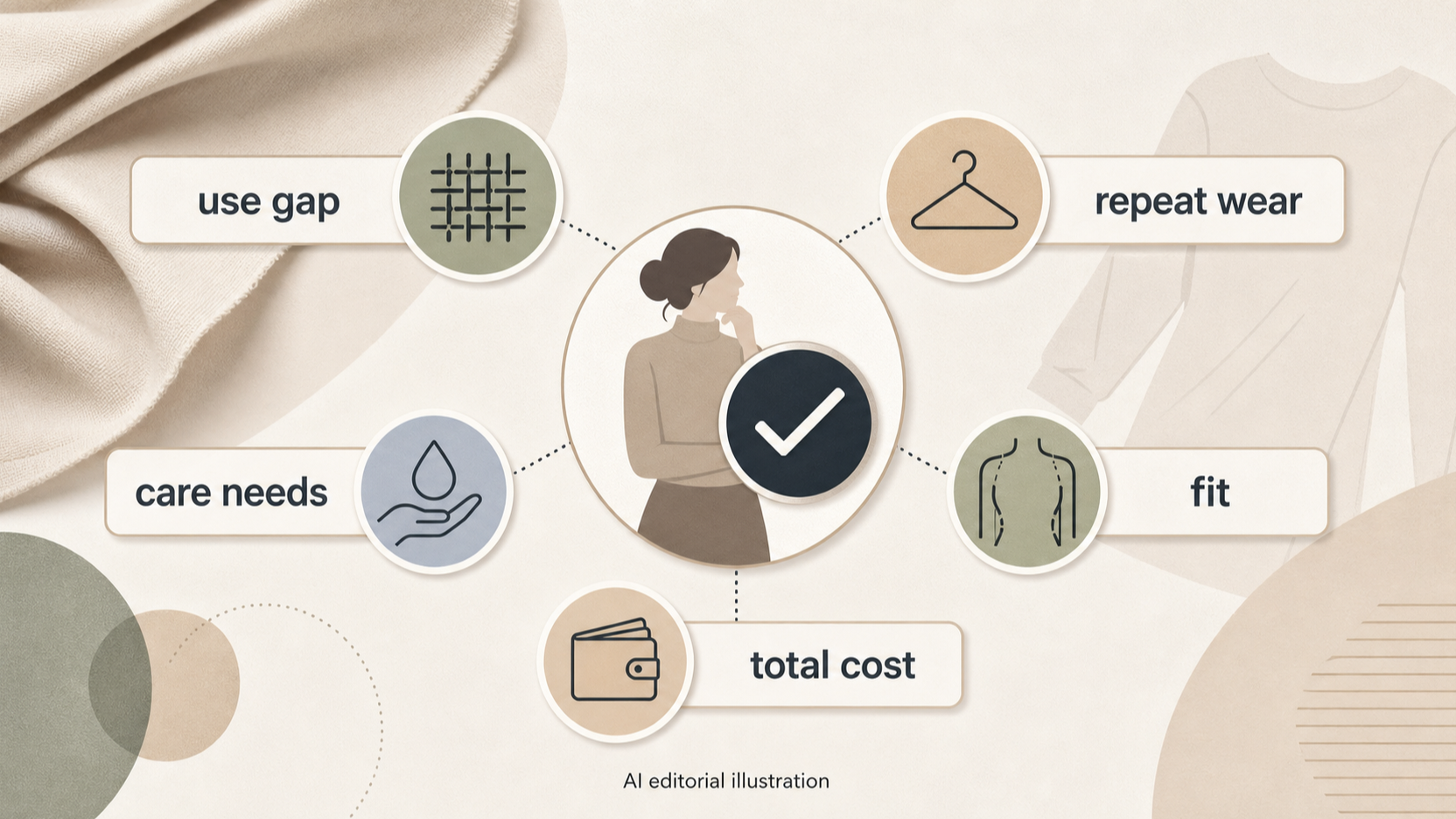 Before placing an order, pause for five questions.
- Use gap: What specific activity, weather condition or replacement need does this solve?
- Repeat wear: Can you name several realistic occasions to use it with your existing kit?
- Fit evidence: Have you checked measurements, product information and how the piece should layer with what you own?
- Return eligibility: Have you read the current regional terms, including any item conditions or exceptions, for this order?
- Delivered cost and care: Have you included shipping, return friction and the routine needed to care for the garment?
If you cannot answer one of these clearly, wait and gather the missing information. An activewear wardrobe audit can reveal overlap with pieces you already own and make a genuine gap easier to see. Current retailer terms remain the source for eligibility, rather than this checklist.
This framework cannot determine personal comfort, availability or the outcome of a purchase in advance. Its purpose is to replace impulse with a repeatable comparison: defined need, realistic wear, fit evidence, current terms and total cost.
Frequently Asked Questions
Should I wait for a sale before replacing worn performance apparel?
Not automatically. If a worn item leaves a genuine gap in regular training, commuting or hiking, delaying may cost more in inconvenience than a future discount would save. Compare a suitable available replacement against your planned use and delivered total. If you have a workable alternative and no imminent need, waiting can give you more time to compare options—but it does not guarantee a lower price or better availability.
How long should I allow to check fit before an event or trip?
Allow enough time for delivery, trying the garment with your existing layers, assessing movement and resolving an eligible return or exchange. The appropriate buffer depends on the retailer, region and your deadline. Check the current terms before ordering and avoid leaving the first try-on until immediately before the event or trip.
Do free returns mean every performance-apparel item can be returned?
No. Arc’teryx’s United States page describes free returns for eligible items within 30 days, which makes eligibility an important condition rather than a blanket promise. Review the policy for your selected region and item. Nike’s official return-policy help page is likewise a prompt to verify the current conditions and exceptions that apply to your order.
Is a more expensive shell or training layer always better value?
No. A higher price does not establish a better fit with your activity, existing layers, care routine or frequency of use. Compare each option against the specific problem it solves and the total commitment required to own it. The better-value choice is the one that credibly meets your verified use gap and earns repeat wear, not necessarily the most expensive or most heavily discounted one.
Explore the wider performance-apparel buying guides when you need category-specific help with layering, fit, materials or care before making the final comparison.
Sources
Related reading
- Best performance apparel for running, training, and hiking: evidence-led top choices
- Patagonia Torrentshell 3L review: strengths, limits, and alternatives
- How to choose performance apparel for running, training, and hiking for your needs
- How to identify genuine performance apparel deals
Editorial information: About our editorial team · Read our editorial policy · Read our affiliate disclosure.