Arc'teryx Beta Jacket Review: The Documentation-Led Take
The Beta Jacket is worth shortlisting if you want a versatile waterproof shell and are prepared to make the decision from the current official product information rather than from an assumed universal verdict. This is a documentation-led guide: it does not claim hands-on use, laboratory testing or independent confirmation of how the jacket performs in prolonged rain, on a particular trail, or after years of wear.
That boundary matters. A jacket name, an older retailer listing or a review of a different version can all leave out details that affect a purchase. Before ordering, open the current official Beta Jacket page for your market and check the listed materials, construction, fit description, sizing guidance, care instructions, available sizes and colour options. Then compare those details with the conditions in which you will actually use it.
Arc'teryx’s US help area provides routes to sizing and fit information, product-care resources, product manuals, order tracking, shipping and delivery, returns and refunds, and product service. Those resources can help you verify the practical parts of the purchase, but they do not substitute for independent performance evidence.
Use this article as a structured shortlist tool. If the documented specification, fit and ownership terms match your needs, the Beta Jacket can remain in contention. If you need proof of a specific performance outcome, compare independent sources and alternatives before deciding.
What to Compare Before Choosing a Waterproof Shell
Start with the job you need the shell to do. A commuter walking between stations, a hiker carrying a pack, a runner wanting a light emergency layer and a gym user travelling in wet weather may all call something a rain jacket, but their priorities can be quite different. Write down your most common activity, the weather you expect, how long you are likely to stay outside and whether the jacket must work over another layer.
Next, separate product-page facts from personal requirements. Product-page facts include the stated material, weather-protection description, hood and pocket layout, weight if listed, fit guidance and care instructions. Personal requirements include whether you run warm, carry a backpack, need room for a fleece, prefer a particular sleeve length or dislike garments that feel restrictive when moving.
Consider ownership as well as use. Check care requirements before assuming the jacket fits your routine. Check the current price in your market, delivery timing, return conditions and whether you can try it with the layer you normally wear underneath. A shell that looks right on a specification list can still be a poor purchase if it is hard to return or does not accommodate your usual system.
Finally, decide what evidence you need. Manufacturer documentation is useful for understanding what is currently offered and how the brand asks customers to use and care for it. It is not, by itself, evidence that one jacket is more durable, more comfortable or more weatherproof in real-world conditions than every competing option.
Where the Beta Jacket May Fit
The Beta Jacket may make sense for a buyer looking for one waterproof shell to consider across several ordinary outdoor and everyday situations, rather than beginning with a highly specialised garment for one narrow activity. Arc'teryx groups shell jackets into categories including hardshells, windshells and softshells, which is a useful reminder that “shell” is a broad buying category rather than a single use case.
For a versatile-shell shortlist, think in scenarios. A hiker may value coverage, hood compatibility and room for insulation. A commuter may care more about everyday layering, packability and whether the care routine is manageable. Someone moving between training, travel and short outdoor walks may prioritise a shell that works over their usual clothes without requiring a dedicated outfit. These are selection questions, not claims about the Beta Jacket’s model-specific performance.
The right test is whether the live official product page documents the features you need for your own scenario. If your use depends on a specialist feature—for example, compatibility with particular equipment, a highly specific cut or a clearly defined activity requirement—compare the current Beta listing with products designed and documented for that purpose.
Do not treat an all-round position as a guarantee that one jacket will excel everywhere. A versatile option can be attractive because it reduces wardrobe duplication, but a more focused alternative may better suit a buyer with demanding or repetitive use.
Fit, Layering and Movement: What to Check
Fit is one of the most important checks because it affects comfort, movement and the usefulness of any weather shell. Begin with the current official sizing and fit guidance, then compare it with your own measurements instead of relying only on the size you usually buy in another brand. If the official product page gives a fit description, read it alongside the sizing guide rather than treating either in isolation.
Think about the layer beneath the shell. If you normally wear a base layer only, your decision may differ from someone who expects to add a fleece, insulated layer or workwear. Where possible, try the jacket with the mid-layer you actually use. If trying it in person is not possible, take measurements carefully and preserve the option to return an eligible item if the fit is wrong.
Check movement in the positions that matter to you: reaching forward, raising your arms, bending to adjust footwear, carrying a daypack or cycling to work. These are personal fit checks, not a substitute for independently tested mobility claims. A garment can match a size chart yet still feel unsuitable for an individual’s proportions or preferred layering style.
Also check sleeves, hem coverage, collar and hood adjustment against your own habits. The official page and sizing resources should be your source for the current product’s stated fit details; your normal layers and movement pattern should determine whether those details are acceptable.
Weather Protection, Materials and Care: Verify the Details
Before purchasing, make a short product-page checklist and complete it from the current official Beta Jacket listing for your region. Confirm the stated weather-protection description, material information, construction details, hood arrangement, pockets, closures and any care instructions. If a detail is not shown clearly, do not assume it is present because it appeared on an older model, a social post or a retailer page.
Materials and construction terms can help you compare products, but they should not be converted into unsupported field-performance claims. A listed membrane, fabric or seam detail may be relevant to a buyer’s requirements; it does not independently prove that the jacket will feel comfortable in every temperature, remain durable through every use pattern or outperform another shell in a storm.
Care deserves equal attention. Arc'teryx provides product-care and product-service resources through its help area. Read the applicable instructions before buying, particularly if you need a low-maintenance jacket or expect frequent use. Follow the current official guidance for cleaning and servicing rather than relying on generic waterproof-outerwear advice that may not apply to the specific garment.
This check also protects against regional differences. Product availability, listed features, care documentation and commercial terms can change by market. Save or revisit the relevant official page at the point of purchase, then check that the specification you are buying is the specification you compared.
Who Should Skip It or Compare Alternatives
The Beta Jacket is not an automatic recommendation for every waterproof-shell shopper. Compare alternatives if you need a narrowly activity-focused feature set and cannot confirm it on the current product page. The same applies if you know you need a particular fit profile, a lower up-front spend, very specific layering capacity or independently verified information about long-term durability and performance.
Buyers who value independent testing should look beyond manufacturer support pages. Official documentation can explain the brand’s current product information and support routes, but it cannot establish comparative superiority or provide an independent verdict on comfort, breathability, durability or weather protection in real conditions.
It is also sensible to compare alternatives if returns would be inconvenient. Fit can be hard to predict online, especially when a shell must work over regular layers. Check the return terms for your market before treating a size experiment as low risk.
A lower-priced option may be the better fit when the use case is occasional commuting or short walks and the additional documented features do not solve a real need for you. Conversely, a more specialised jacket may justify comparison when your activity creates requirements that a general shortlist cannot answer. The aim is not to reject the Beta Jacket; it is to make sure the evidence and the purchase match.
Returns, Delivery and Product Support
Commercial terms can change the value of an otherwise suitable jacket. Arc'teryx’s US help information links shoppers to order tracking, shipping and delivery, returns and refunds, product service and product-care resources. Its US shipping-and-returns page states that eligible items may be returned within 30 days.
Treat that as a starting point, not a universal promise. Before ordering, confirm the current terms shown for your selected region, whether your item is eligible, the condition requirements, the return process and any relevant exclusions. Check expected delivery timing as well if the jacket is needed for a trip or a particular season.
Keep the order confirmation, review the current care guidance and use the official support routes if you need help with delivery, a return or a service request. These checks reduce purchasing friction without making assumptions about terms that may differ by country, product or time of purchase.
The Sensible Shortlist Decision
AI-generated generic editorial illustration — not a retailer product photo and does not depict the reviewed product or service. Make the final shortlist decision easier by turning the documented checks into a compact buyer decision path.
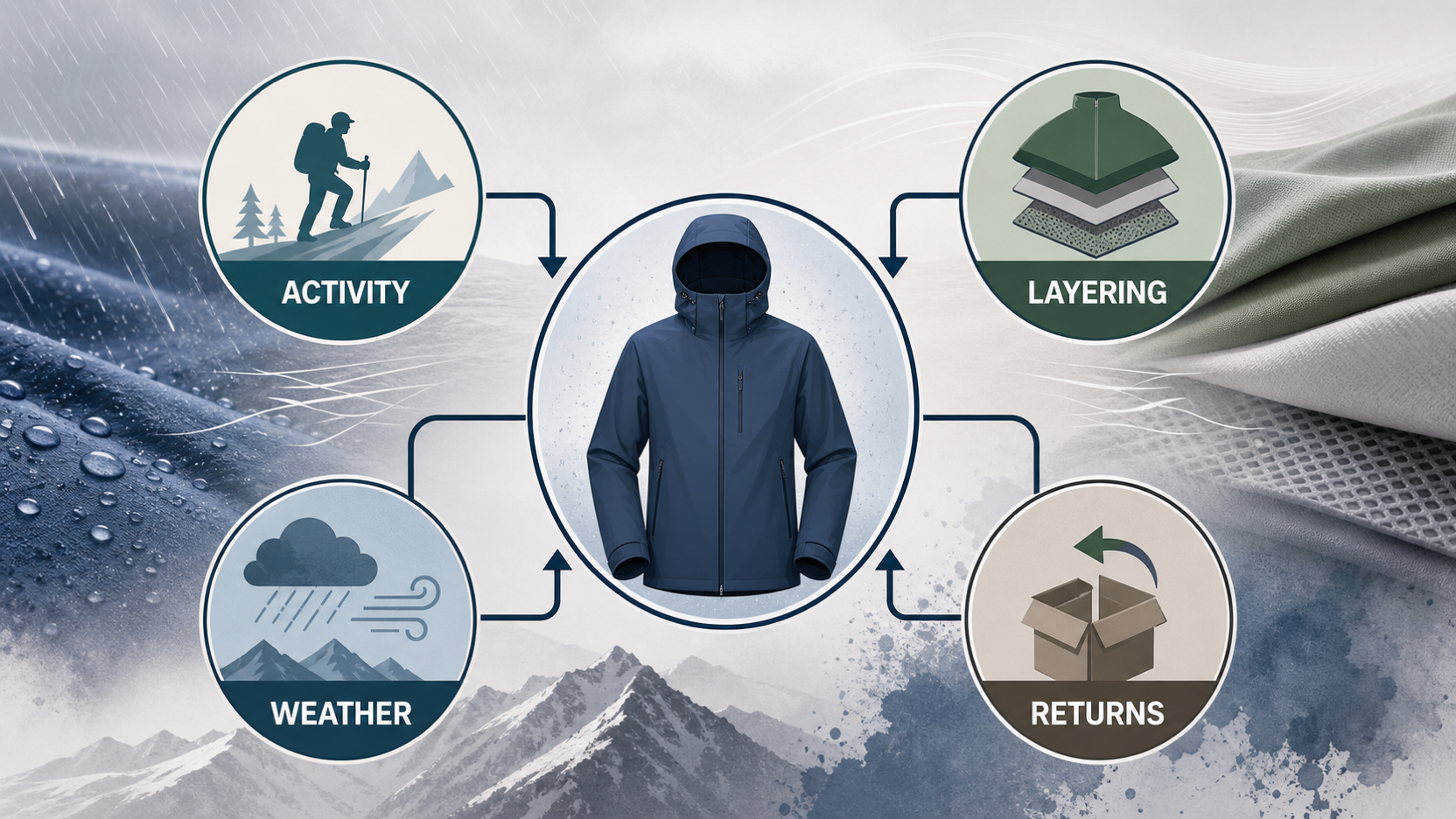 Shortlist the Beta Jacket when four things line up: the current official specification fits your intended use, the official sizing information works with your usual layers, the care routine is acceptable and the commercial terms in your region are comfortable for you.
Use a simple decision path. First, define your activity and weather exposure. Second, check the live product page for the details that matter to that use. Third, compare sizing with your measurements and normal mid-layer. Fourth, confirm delivery, return eligibility and service information before placing the order. If any of those steps leaves an important question unanswered, compare another shell or seek independent evidence instead of filling the gap with assumptions.
{{primary_cta}}
The conclusion is deliberately conditional. The supplied official information supports a careful documentation-based shortlist, not a blanket quality verdict or an independently validated performance recommendation.
Frequently Asked Questions
What should I verify on the current Beta Jacket product page before buying?
Verify the current listed materials, weather-protection description, construction details, hood, pockets, fit guidance, available sizing and care instructions for your market. Check those details against your intended activity and normal layers. If a feature is not clearly documented on the current official page, do not assume it applies.
How should I assess whether the fit works with my usual layers?
Start with the official sizing and fit guide, compare it with your measurements, then assess the jacket with the mid-layer you commonly wear where possible. Move through the positions that matter to your routine, such as reaching, bending or carrying a pack. Check current regional return terms before ordering if you cannot try it first.
What return information should I confirm before ordering?
Confirm the terms for your selected region, item eligibility, return window, condition requirements, process and any exclusions. Arc'teryx’s US shipping-and-returns page says eligible items may be returned within 30 days, but shoppers should verify the current terms and regional applicability before purchase.
Where can I find Arc'teryx help for delivery, returns and product service?
Arc'teryx’s US help area provides links for order tracking, shipping and delivery, returns and refunds, product service, product care, sizing and fit guidance, and product manuals. Use the current official help pages for the market in which you are purchasing.
Sources
Related reading
- Best performance apparel for running, training, and hiking: evidence-led top choices
- Patagonia Torrentshell 3L vs Arc'teryx Beta Jacket: which is the better fit
- Patagonia Torrentshell 3L review: strengths, limits, and alternatives
- How to choose performance apparel for running, training, and hiking for your needs
Editorial information: About our editorial team · Read our editorial policy · Read our affiliate disclosure.